Wednesday, May 6, 2015

Blog 21: Exit Interview

(1)  What is your essential question, and what are your answers?  What is your best answer and why?
My essential question is “What is the best way a neonatal nurse can ensure a premature baby is healthy?”
My first answer is “By assuring premature infants get the right nutrition they need to reach their ideal weight to grow properly.”
My second answer is “Make sure neonatal nurses have good communication with parents to ensure that the preemie will be healthy.”
My third answer is “By introducing the COPE for Hope program to parents to acquire certain skills and support, they need to be able to take care of their infant.”
My best answer is my answer one by assuring premature infants gets the right nutrition they need to reach their ideal weight to grow properly because if a premature infants gets the right nutrition and reaches his or her ideal weight most of the problems that premature infants are faced with can be solved and treated with the right nutrition.

(2)  What process did you take to arrive at this answer?
A lot of my research has stressed the importance of nutrition and how avoiding early malnutrition can have both short- and long-term benefits for the premature infant which can help a premature infant grow healthy and live on to live healthy lives when the leave the NICU.

(3)  What problems did you face?  How did you resolve them?
I had trouble finalizing my last answer, There was an idea I was trying to get across but I couldn’t find the right way to word my last answer, and I resolved this problem by finding a program that provides parents with the skills and knowledge I wanted to explain in my last answer.

(4)  What are the two most significant sources you used to answer your essential question and why?
My mentor Diana Guevara RN at the LAC+USC Medical center

Oswalt, Krista L., and Darya Bonds McClain. "Reducing Anxiety among Children Born Preterm and Their Young Mothers." National Center for Biotechnology Information. U.S. National Library of Medicine, 1 May 2014. Web. 06 May 2015.

Friday, May 1, 2015

Adrian's Preemie Arrival

My cousin gave birth to her son Adrian the 3rd of April that Friday Night. She was only seven months pregnant when she had to deliver my cousin in an emergency c-section. My cousin has delivered prematurely before but she was still frightened because Adrian only weight 2 pounds and 3 ounces when we was first born. He was admitted into the NICU under close supervision. In the picture above my cousin Adrian is about 2 weeks old, he is inside an incubator, connected to a ventilator because his lungs were still weak to breathe on his own, the little sponge on his right side of his leg is a tube that contains caffeine to help the lungs become stronger. His eyes are also covered because they were very sensitive and delicate to light at the time, Adrian also had a feeding tube through his nose to help him eat. Adrian is now 4 pounds and 10 ounces he was released from the NICU just a few days ago, he was able to leave because he had reached the ideal weight, he can now be bottle fed and breathe on his own. Of course my cousin still has precautions because the baby's immune system is not that strong but baby Adrian is growing bigger and healthier each day.

Sunday, April 26, 2015

Independent Component 2

LITERAL
(a) I, Valerie Lopez, affirm that I completed my independent component, which represents 37 hours of work.
(b) Diana Guevara RN, LAC+USC Medical center
(c) Linked on the sidebar under Senior Project Hours.
(d) I did extra mentorship hours with my mentor Diana. I also shadowed another nurse named Karina Gomez. I would go with Karina and Diana while they visited patients, sometimes I was not able to go into the room with them because of patient confidentiality and sometimes some patients did not feel comfortable with anyone that was not the a nurse or a doctor. I would help my mentor sort files and discharge papers. Sometimes when my mentor was busy since she spends most of her time in the emergency room, I had to go to the supply rooms to open boxes and sort out different equipment. My favorite equipment to sort was when I would help in the labor and delivery room sorting baby stuff. I had to open boxes of diapers, bottles, formula, socks and blankets. My favorite job was having the opportunity to visit some mother’s (mostly the ones that were being discharged) to take them any basic baby necessities they needed to take home.
INTERPRETIVE 
Name tags for newborns I would have to fill out. (This one is in spanish)


 Diapers and a Baby's discharge outfit to go home in!
Wash cloths the hospital gives out.

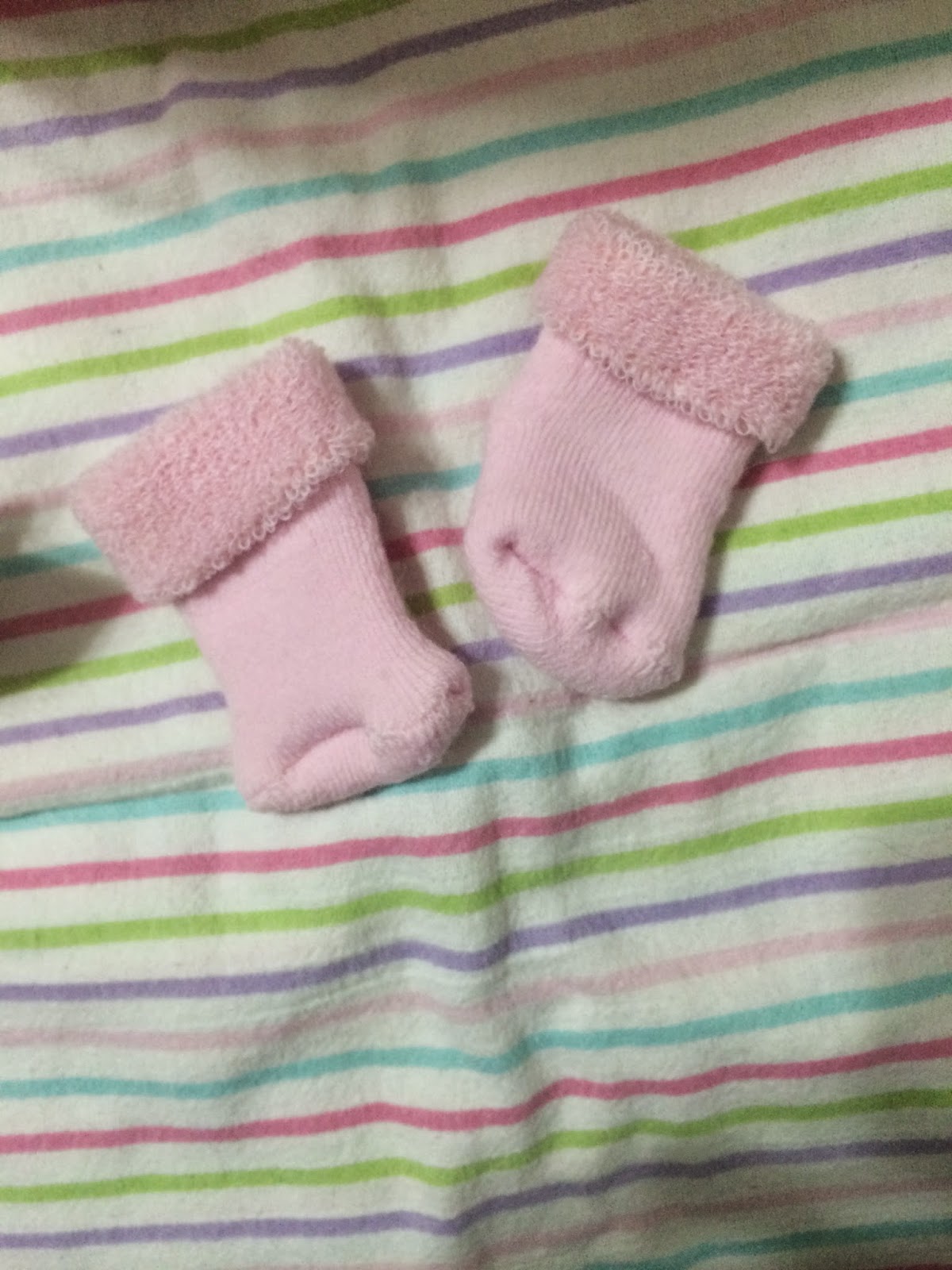
Socks or "booties" the hospital provides.
The way I had to sort the different cloths, blankets, socks according to gender.

 APPLIED

My independent component two helped me get a better understand between nurse and patient communication. When I would shadow my mentor it was a great experience to see the way she communicated with each patient, she was always so caring and respectful (even if the patients were sometimes rude to her). My mentor always looked like communicating came natural to her but as I learned with different patients it could be a struggle. I also built upon my own communication skills because my mentor would always give me pointers and ask me different questions. I also communicated with different nurses and they would always answer any of my questions that I had.

Tuesday, March 31, 2015

Cope For Hope


This month I really focused on learning about the COPE program.The COPE NICU Parent Program is an evidence-based Educational-behavioral intervention program for parents who have just experienced the premature birth of an infant. It is designed to begin very early in the course of the NICU admission and extends through the first week after discharge. Some of the improved parent outcomes could result in less stress in the Neonatal Intensive Care Unit. There are also stronger beliefs for parents and confidence in their ability to care for their preterm infants. Parents tend to also have more developmentally sensitive interactions with their preterm infants, which can lead to less depression and anxiety symptoms during and after NICU stay. In the end the COPE program gives greater satisfaction for parents with the NICU stay and higher readiness for their infant's discharge from the NICU.

Wednesday, March 11, 2015

Fourth Interview Questions

1. Do you believe the technology in the NICU helps premature infants grow into healthy infants?
2. What in your opinion is the most important technology a premature infant needs while in the NICU?
3. In your opinion do you believe gestational age plays a big part in which technology a premature baby may need in the NICU?
4. What is the best way to teach parents how to work with complicated technology?
5.Do you believe that incubators play an important role in all premature infants not just micro-preemies?
6. Do all babies need breathing tubes?
7. Do all premature infants need feeding tubes?
8.What information is most important that a parent should know when feeding the infant?
9. Do you always feel the need to tell the truth to parents of premature infants even if it makes you uncomfortable?
10. What can you tell me about the NICU?
11. What precautions do parents need to take to avoid infection in their infants?
12. How does caring for a premature infants differ from caring a full term infants?
13. What is the outlook for premiees who are born before 28 weeks?
14. Is breast milk necessary for growth in a premature baby?
15. Does nutrition play a big part in a premature infant growing healthy?
16. What challenges can a parent face if they take their baby home too early?
17. What determines when a premature infants can be released to go home
18. Can parents take home some of the necessary technology if the premature baby needs it?
19. What determines when a premature infants can be released to go home?
20. What side effects could a premature babies treatments have?

Wednesday, March 4, 2015

Blog 17: Third Answer


1) 
What is the best way a Neonatal Nurse can ensure a premature baby is healthy
2) 
By assuring premature infants have the technology they need to survive.
3) 
- An incubator is crucial in the early first days life in premature babies.
- Breathing tubes and oxygen machines are crucial in babies that have lung diseases or trouble breathing which premature babies have most in common.
- Helps keep track of the babies immature organ systems
4)  
-"Mayhew, Susan L. "CAS – Central Authentication Service." CAS"
- "Robin, Suzanne. "How Long Are Premature Babies Kept in Incubators?" Everyday Life.
-  "Blackmon,, Lillian R. "Advanced Practice in Neonatal Nursing." EBSCO."

5) 
The correct use of technology with preemies is very crucial because some babies are depending on machines such as oxygen tanks and heart monitors to see if the baby is in distress or not, this technology can help diagnose future problems that will or can affect the baby.